 Caleb & Logan’s
Surface dwellers
They like shallow, loose bedding with food scraps, leaves, cardboard, and air pockets.
Logan’s Worm Fact
Kid-friendly facts about red wigglers, composting, and how tiny soil builders turn scraps into better garden habitat.
This week’s simple science
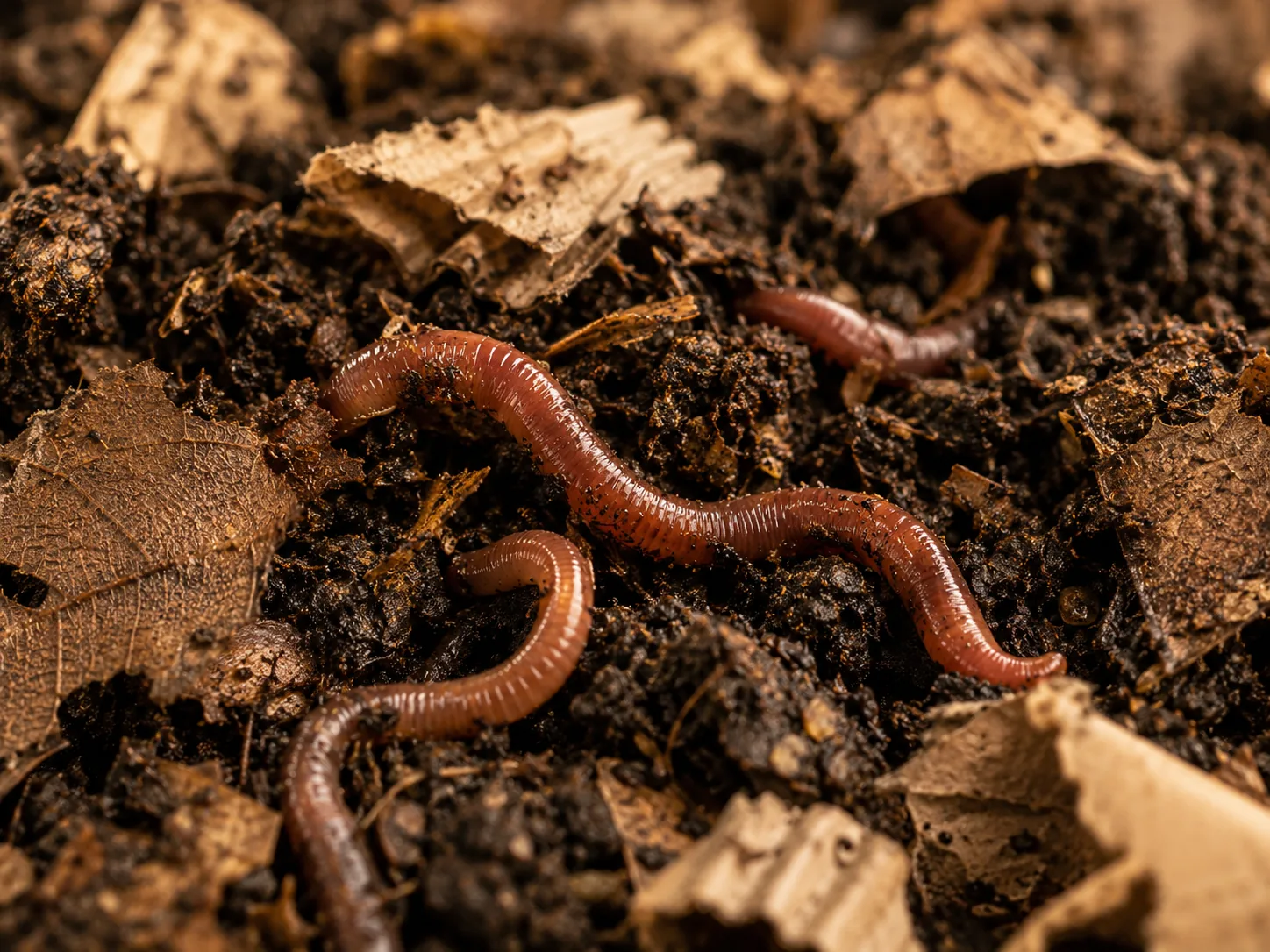
Red wigglers feed on soft scraps, decomposing leaves, cardboard fibers, and the tiny microbes growing throughout the bin. The worms, microbes, moisture, air, and bedding all work together. That is why a healthy worm bin is more like a living habitat than a trash can.
How it works
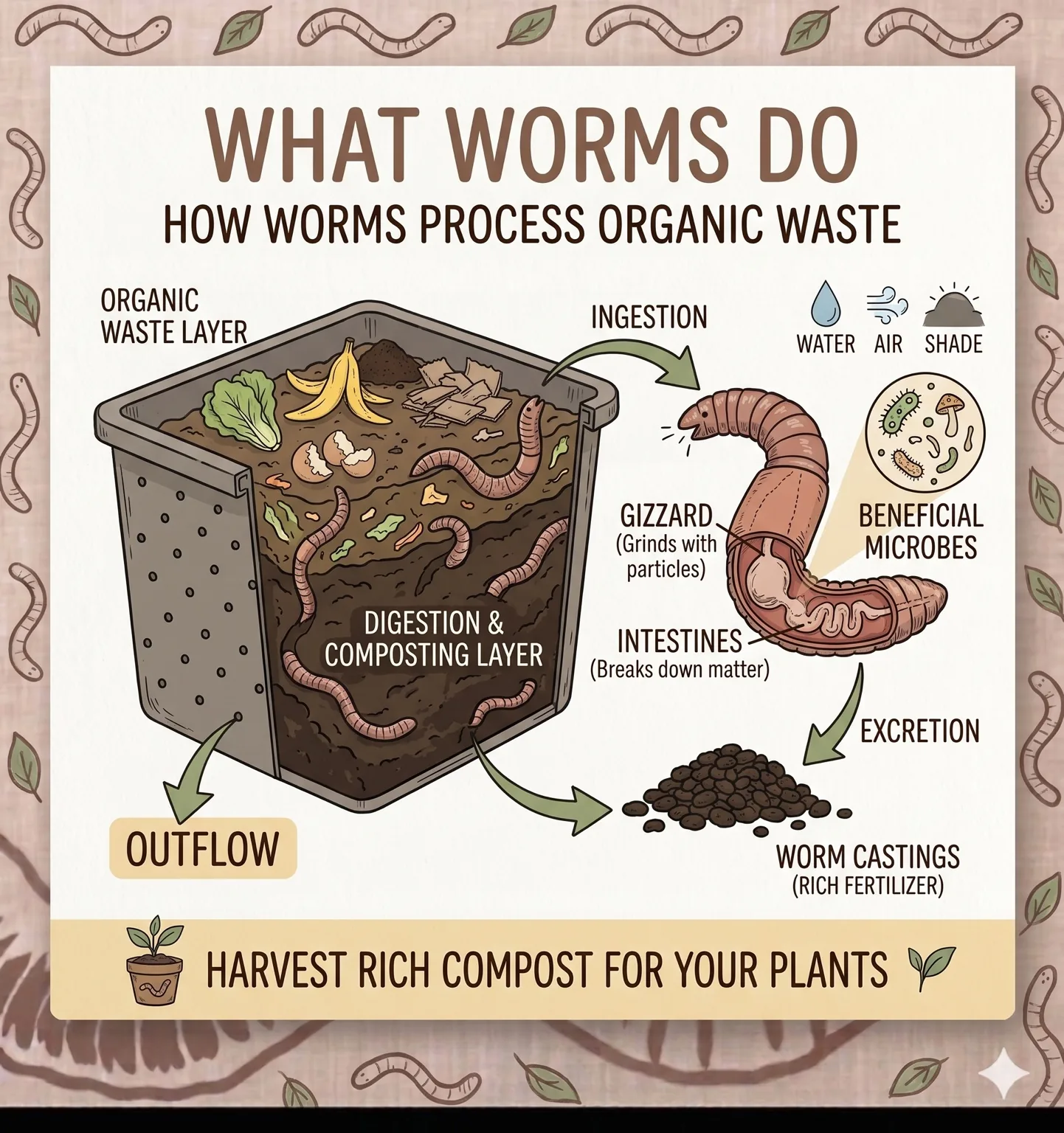
A worm bin works best when food is added slowly and covered with carbon-rich bedding like shredded cardboard or dry leaves. Microbes begin breaking food down, worms graze through the soft material, and castings build up over time.
Red wiggler basics
Red wigglers are not the same as deep-burrowing garden nightcrawlers. They prefer the upper layers of loose, organic bedding.
They like shallow, loose bedding with food scraps, leaves, cardboard, and air pockets.
They breathe through their skin, so bedding should feel like a wrung-out sponge.
Direct sun and hot bins are dangerous. In Virginia Beach summers, shade matters.
Worms do not chew like people. Smaller, softer food breaks down faster.
Crushed eggshells or a little clean mineral grit helps worms process food in their gizzard.
Finished castings are the dark, earthy material gardeners use to support better soil.
Myth busters
Most worm-bin problems come from treating the bin like a garbage can instead of a habitat.
Truth: Overfeeding causes stink, fruit flies, mites, heat, and stressed worms. Feed lightly and wait until food disappears.
Truth: Damp is good. Soggy is bad. Standing liquid means the bin needs more dry bedding and less wet food.
Truth: They need shade, airflow, moisture, bedding, and protection from heat, freezing, chemicals, and pests.
Family learning idea
Add a tiny amount of safe food in one corner of the bin and cover it with shredded cardboard. Check again in a few days. If the food is disappearing and the bin smells earthy, the worms are keeping up. If food is still sitting there, wait before feeding again.
Quick answers
Not like people, but they do rest and slow down when conditions are cool, dry, or stressful.
No. Red wigglers prefer darkness and usually move away from bright light.
Cardboard adds carbon, structure, and airflow. It helps prevent wet, smelly bins.
Crushed eggshells add grit and help buffer acidity when used in small amounts.
Keep learning
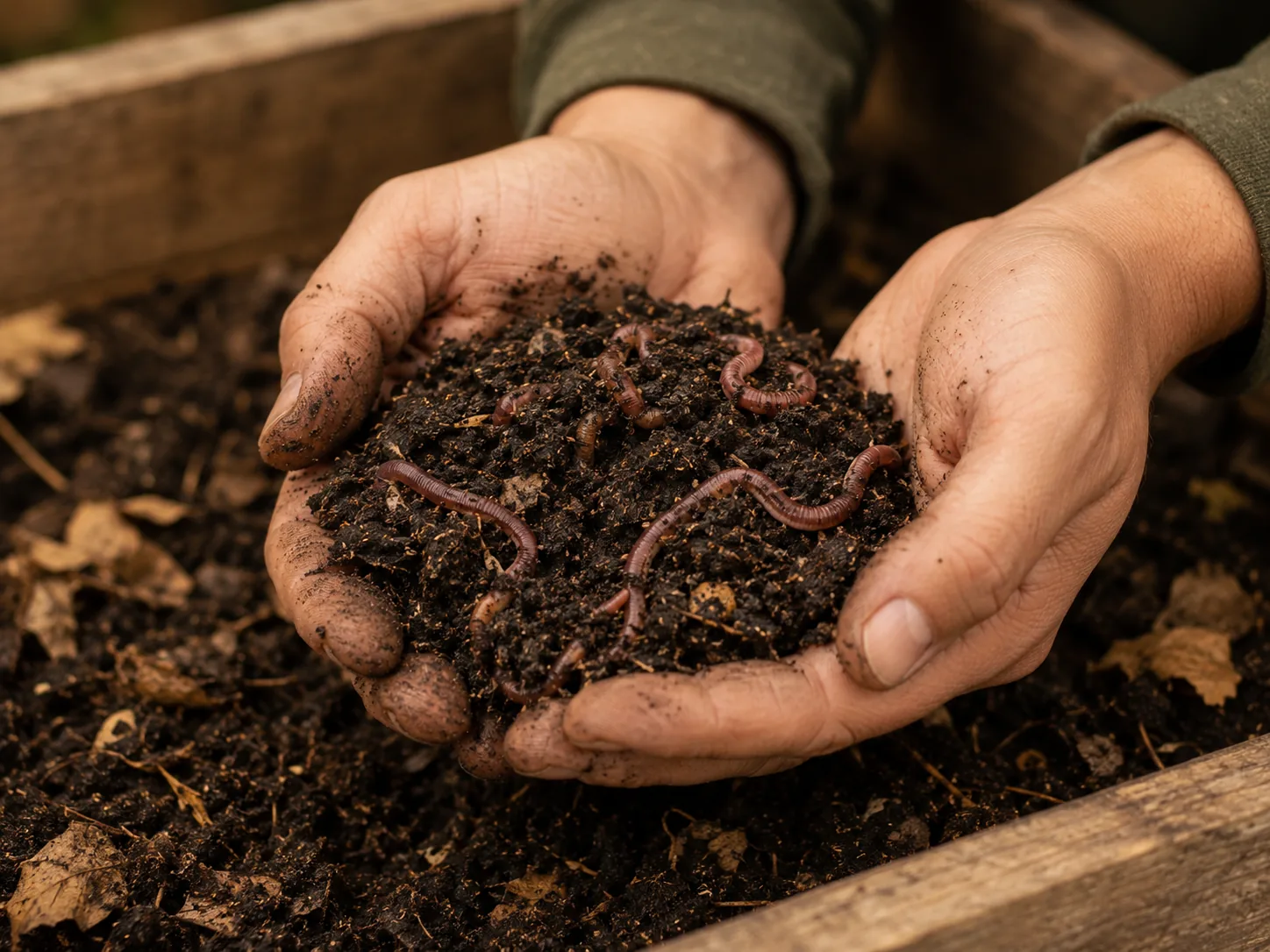
Weekly farm note
A simple weekly check-in on moisture, bedding, food, and worm activity.
Read the bin checkWorm science made simple
Kid-friendly worm facts about composting, soil health, and how red wigglers live.
Learn a worm factScraps, bedding, and balance
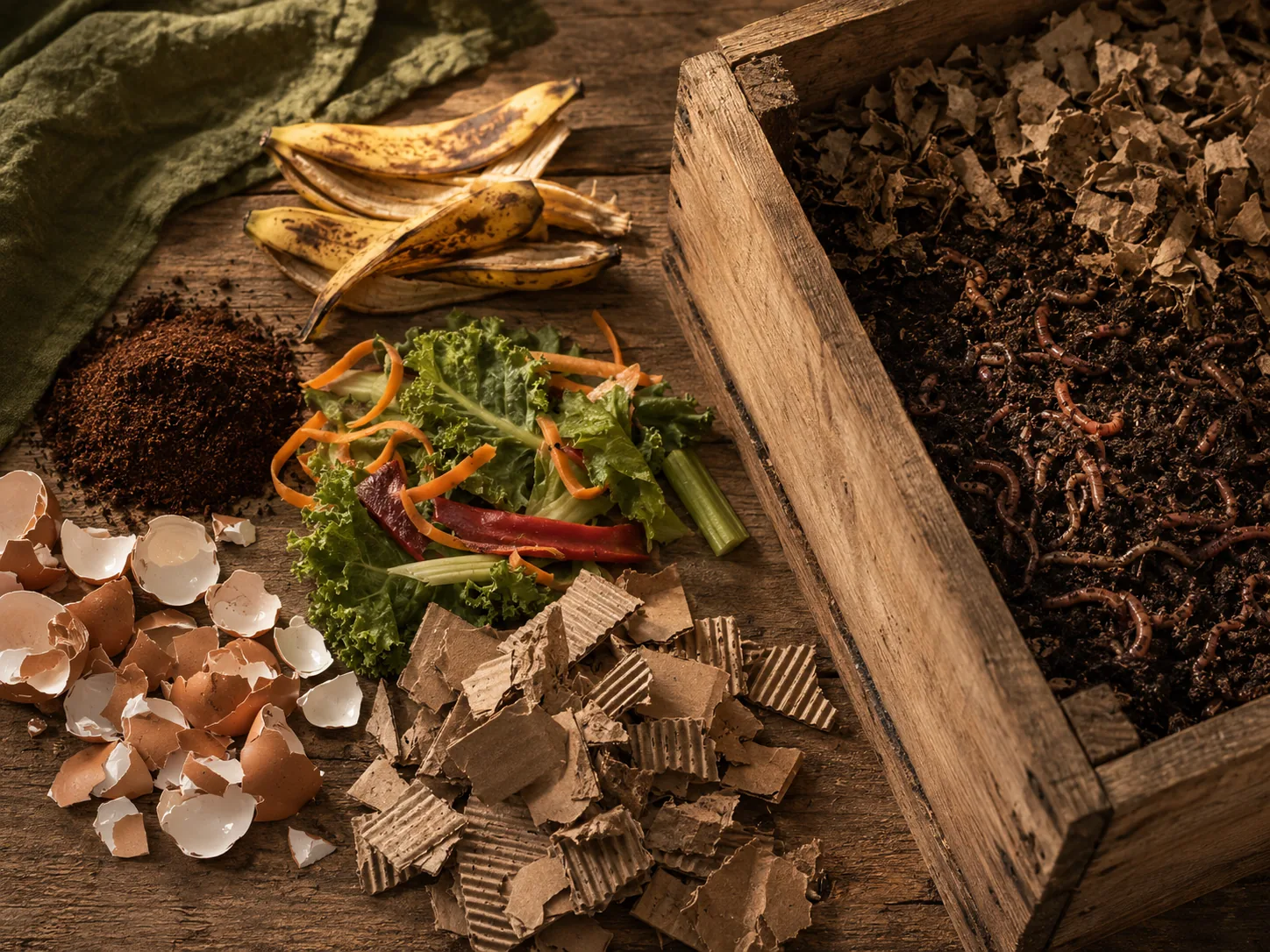
A peek at the kitchen scraps, cardboard, leaves, and eggshells going into the bins.
See the menu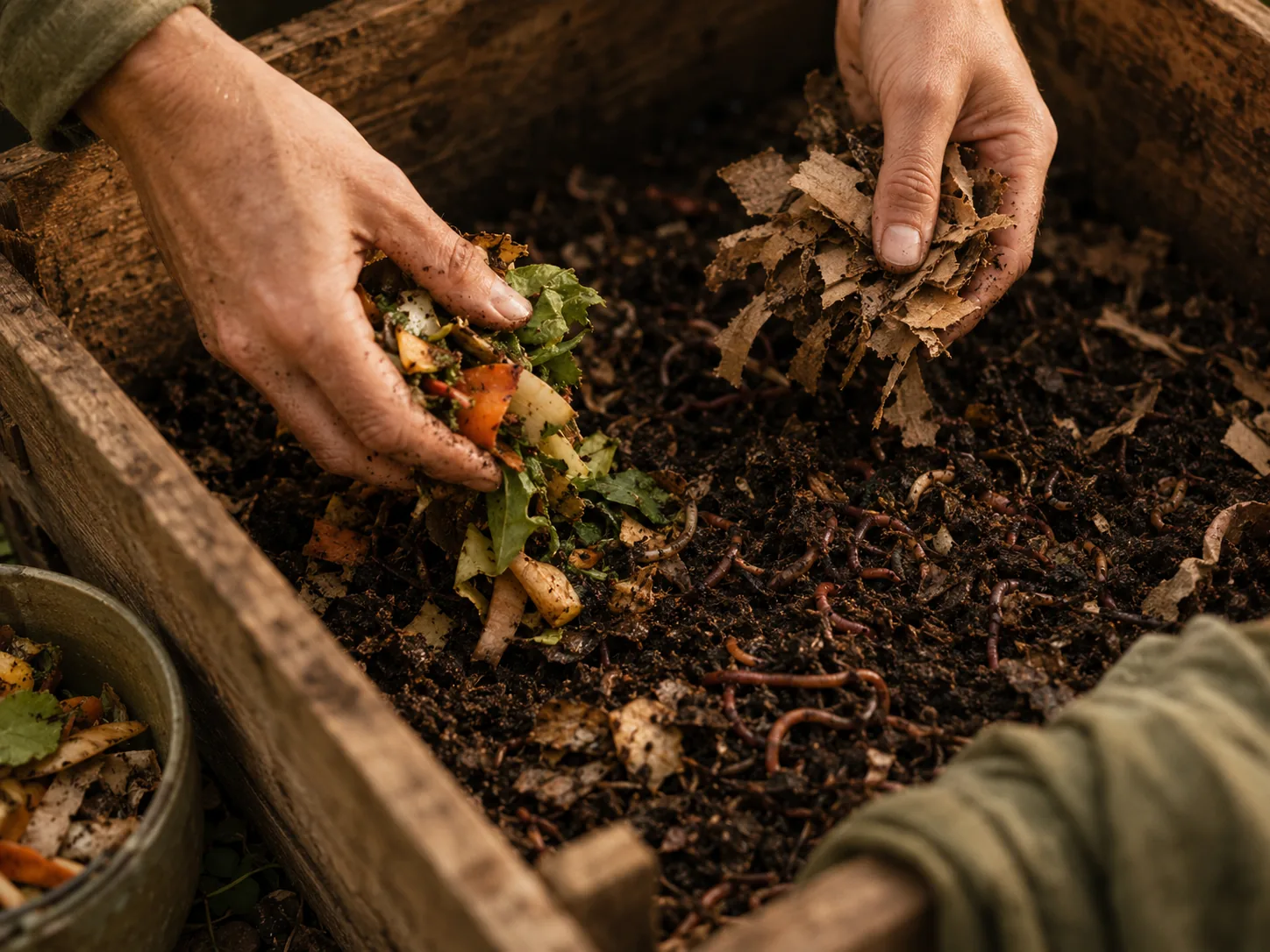
Beginner composting tips
Simple ways to keep a worm bin healthy while turning waste into better soil.
Start learningReady to start?
Choose a bait cup, starter cup, quart pack, or beginner worm-bin kit. Local pickup in Virginia Beach.
Local Pickup
Skip the shipping. Support local. Place your order and pick up fresh worms right here in Virginia Beach.