 Caleb & Logan’s
Bedding
Shredded cardboard, paper, leaves, or coco coir hold moisture and create air pockets.
Scraps to Soil
A beginner-friendly guide to building a healthy worm habitat with bedding, food scraps, air, moisture, and patience.
The simple system
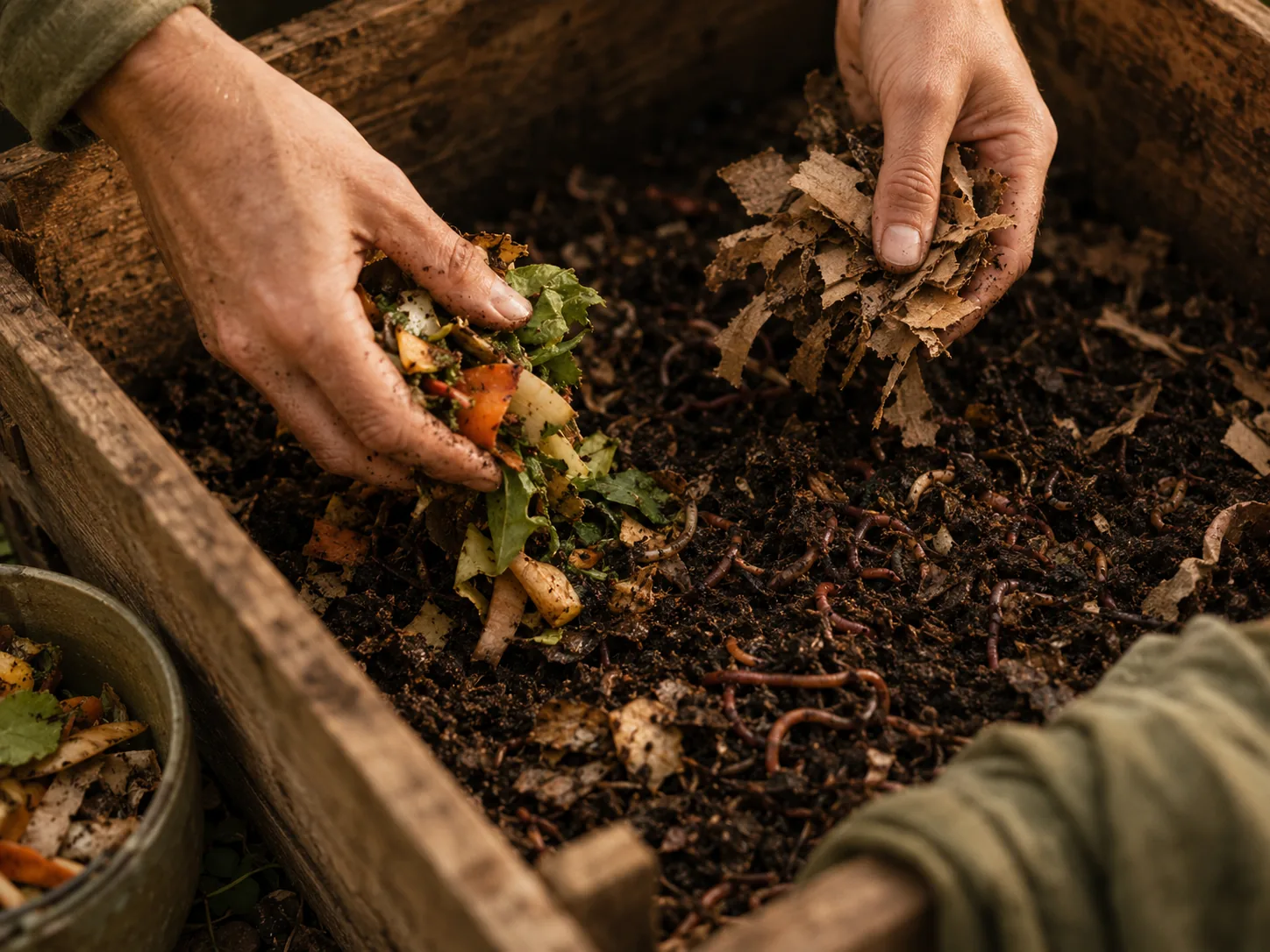
A worm bin is not just a container of worms. It is a small living habitat. Keep these four parts in balance and the bin usually stays earthy, active, and easy to manage.
Shredded cardboard, paper, leaves, or coco coir hold moisture and create air pockets.
Keep bedding like a wrung-out sponge: damp enough for worms, never swampy.
Small pockets of vegetable scraps, fruit peels, coffee grounds, and eggshells.
Loose bedding and ventilation help prevent sour smells and stressed worms.
Beginner setup
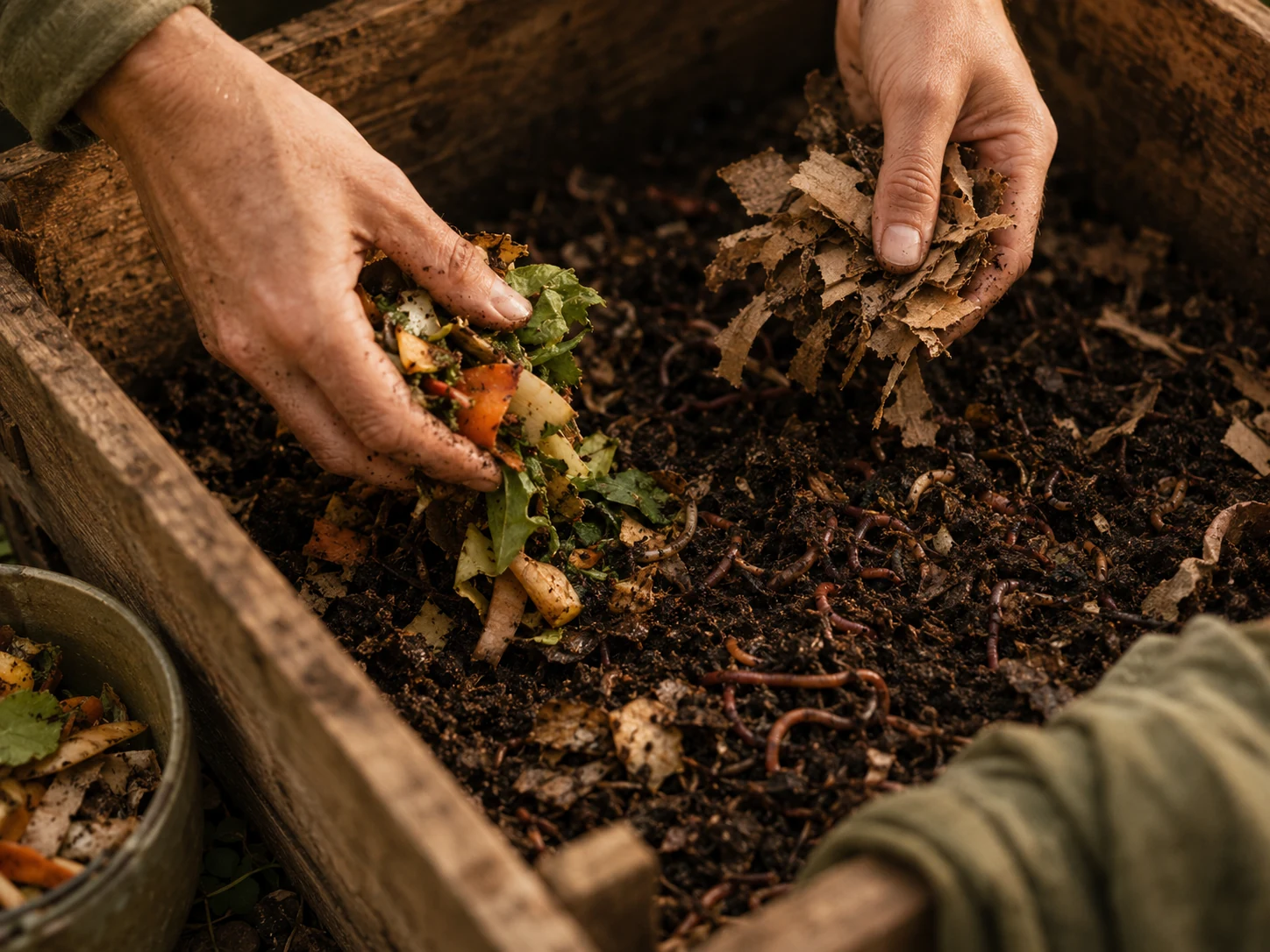
Most new worm bins fail because they are treated like trash cans. A healthy bin is more like a tiny woodland floor: carbon-rich bedding, moisture, microbes, air, and a little food at a time.
Layer by layer
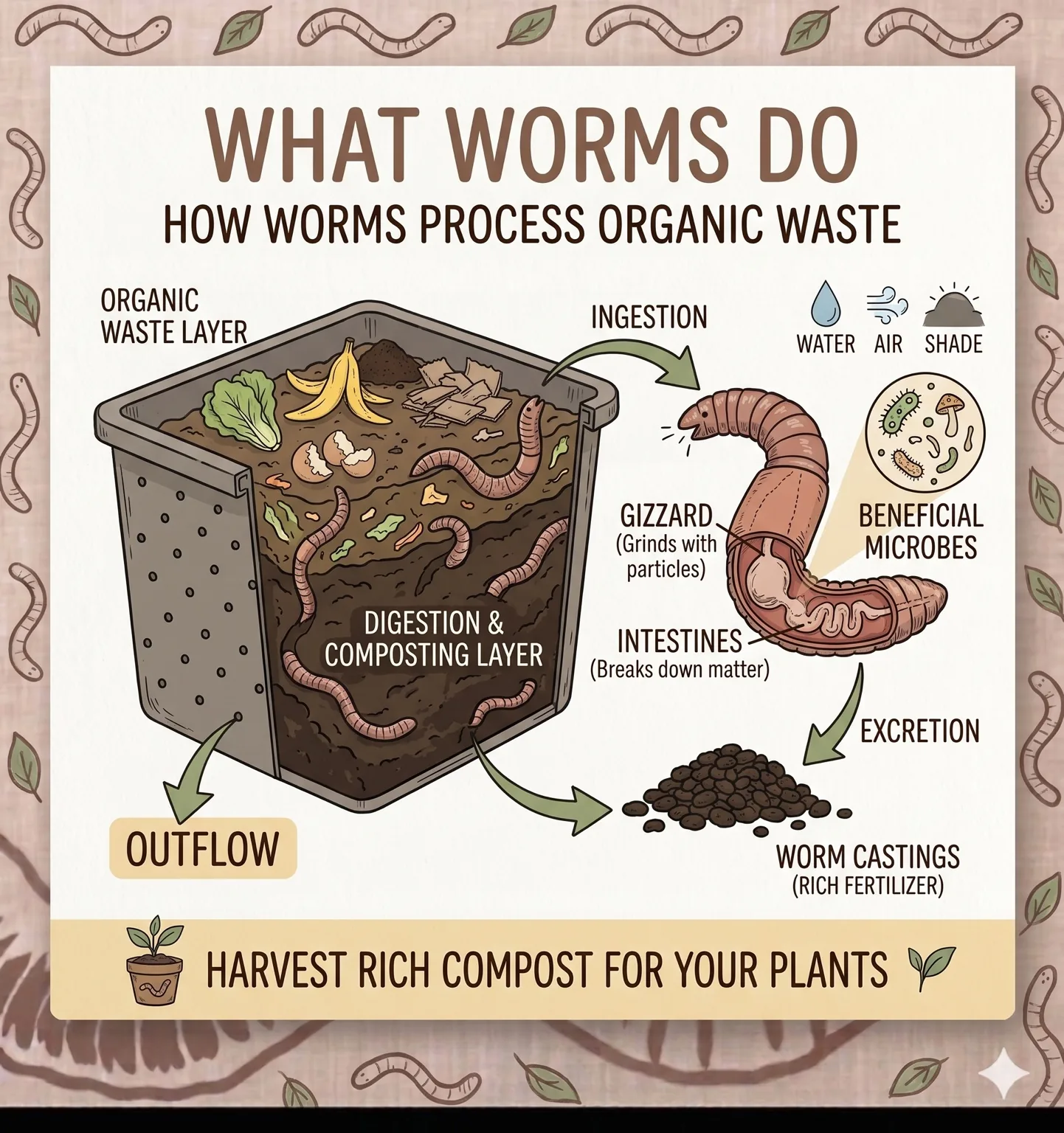
Worms, microbes, fungi, and tiny decomposers work together. The worms do not instantly eat everything. They thrive when food begins breaking down in a moist, oxygen-rich habitat.
What to add
When in doubt, add less food and more bedding. You can always feed again later.
Fast fixes
Use these fixes before the bin gets out of balance.
Stop feeding, remove problem scraps, add dry bedding, and increase airflow.
Add shredded cardboard or dry leaves. Leave the lid cracked briefly in a protected area.
Bury food deeper, cover with bedding, freeze scraps first, and avoid exposed fruit.
Check heat, moisture, oxygen, and acidic food. Escaping usually means the habitat is wrong.
Wait. New bins often process slowly. Feed less until the population grows.
Move it cooler, stop feeding, add bedding, and avoid fresh grass or large food piles.
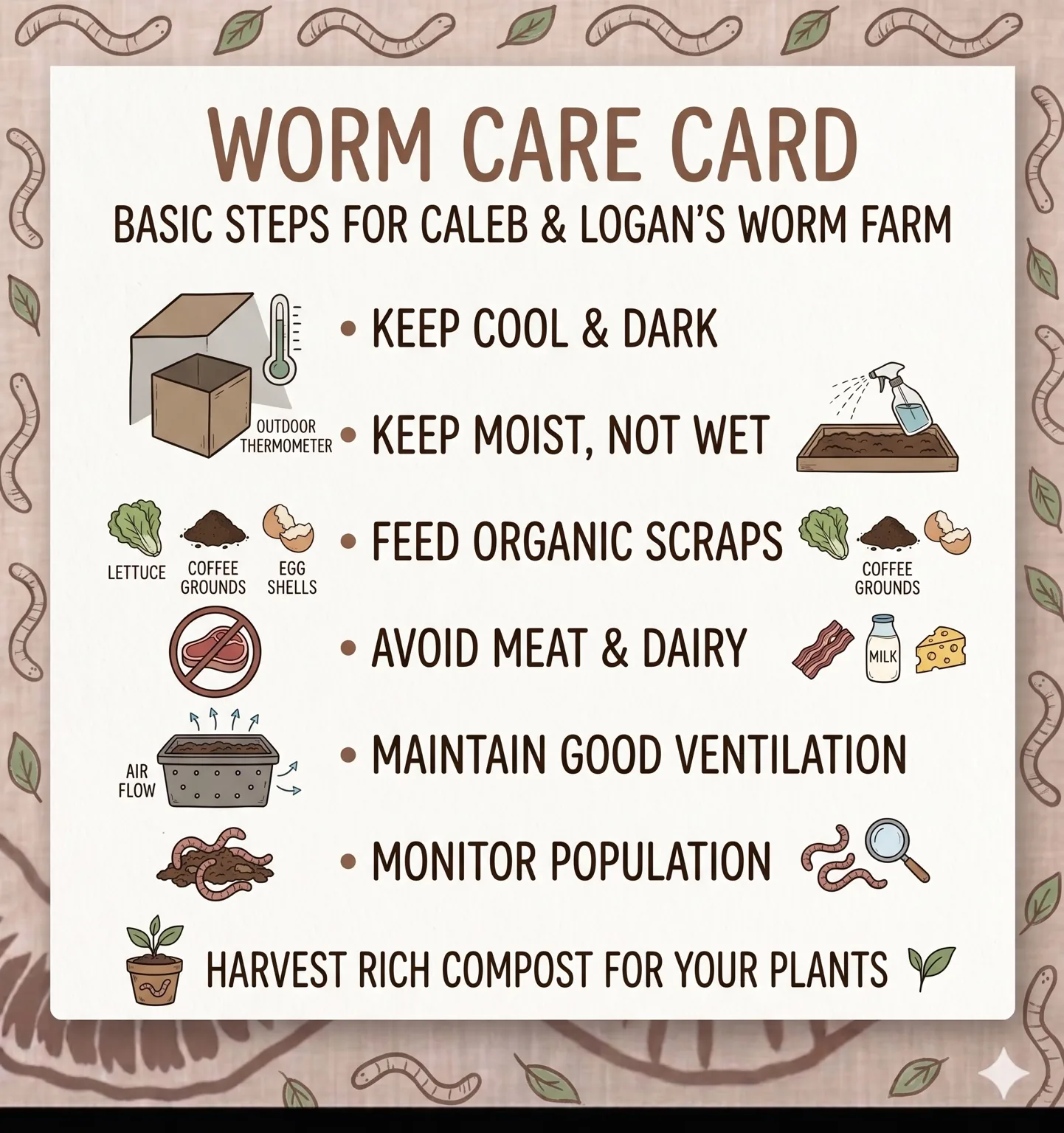
Care card
This is the simple customer-friendly reminder: keep the bin cool, moist, ventilated, and lightly fed. It is perfect for families, classrooms, and first-time composters.
Quick answers
Small bins usually need weeks to months. The early goal is a stable habitat, not instant harvest.
A small amount of clean finished compost can help introduce microbes, but avoid questionable or chemically treated material.
A tiny handful can add grit and microbes, but worm bins should be mostly bedding and organic material.
Yes, but protect bins from heat. Deep shade, airflow, and light feeding are important.
Keep learning
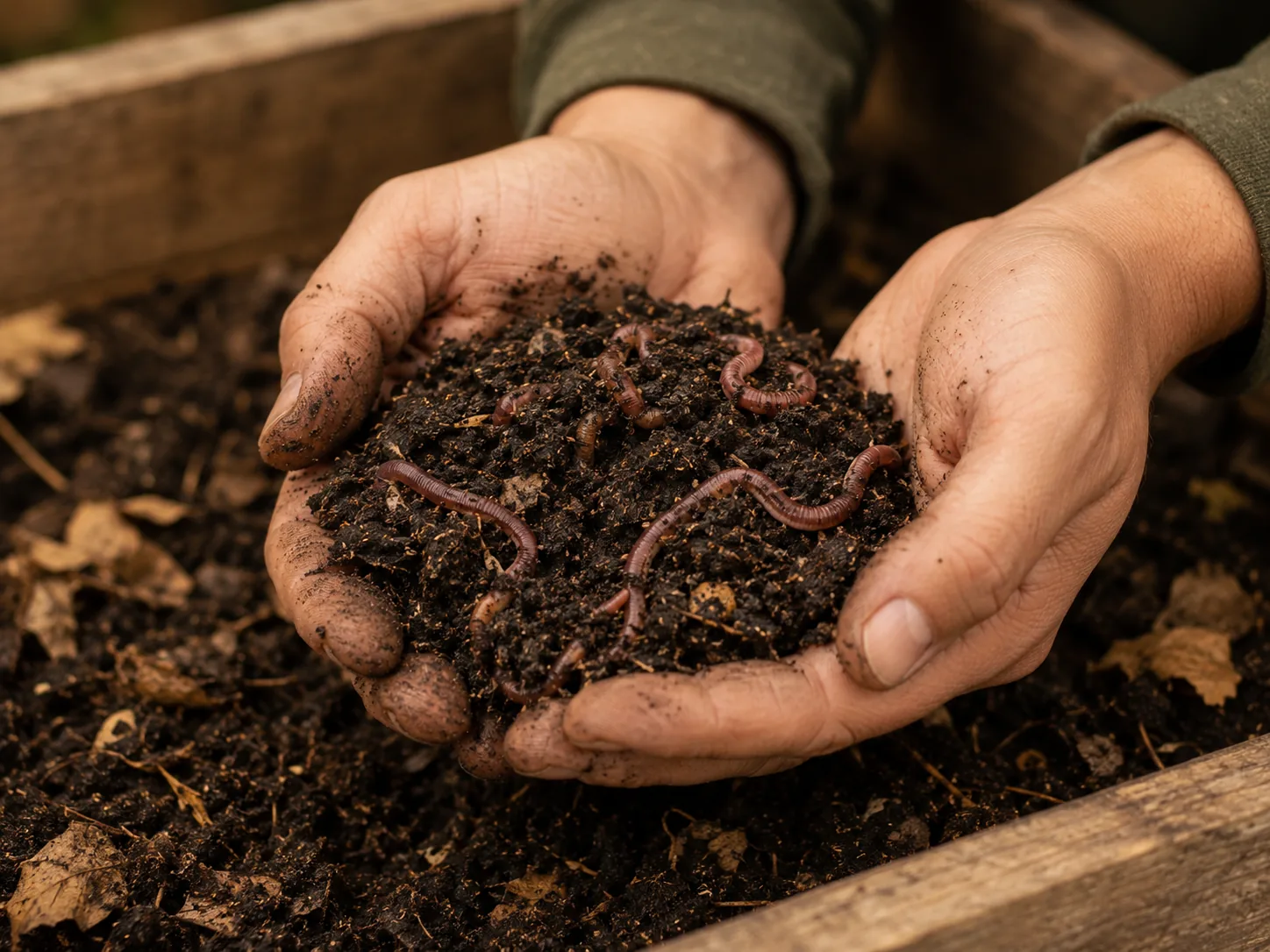
Weekly farm note
A simple weekly check-in on moisture, bedding, food, and worm activity.
Read the bin check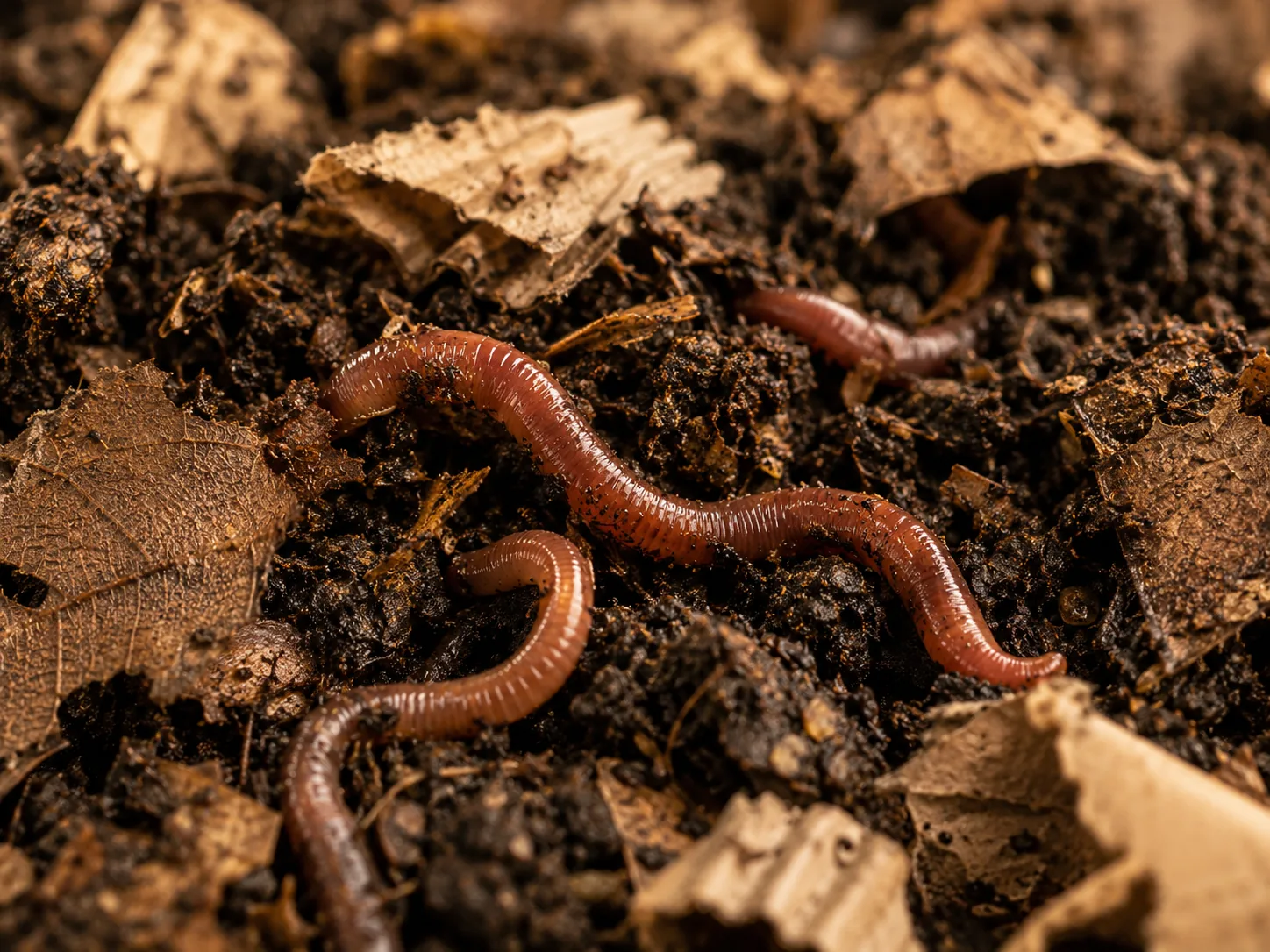
Worm science made simple
Kid-friendly worm facts about composting, soil health, and how red wigglers live.
Learn a worm fact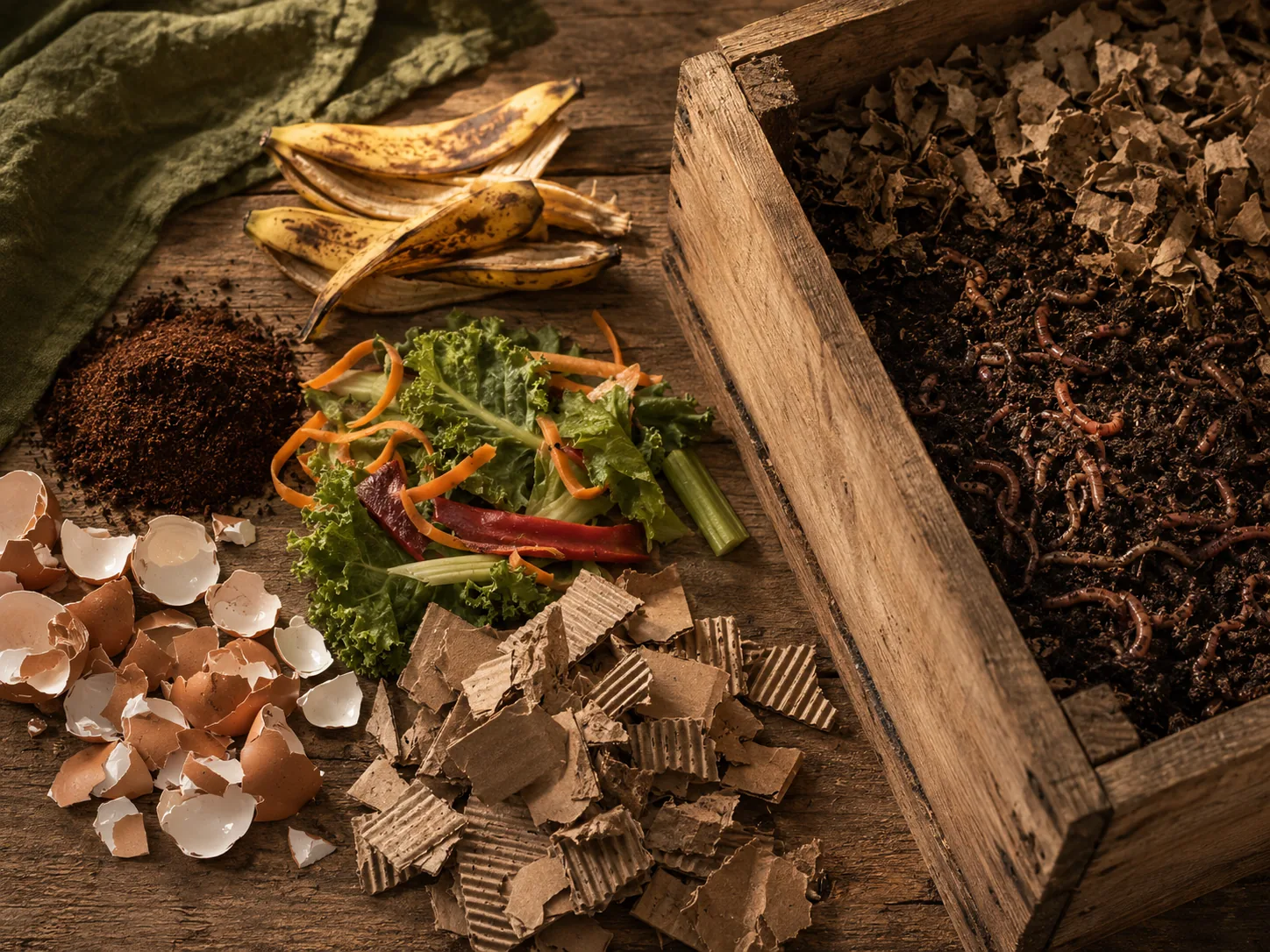
Scraps, bedding, and balance
A peek at the kitchen scraps, cardboard, leaves, and eggshells going into the bins.
See the menuBeginner composting tips
Simple ways to keep a worm bin healthy while turning waste into better soil.
Start learningReady to start?
Choose a starter cup, quart pack, or full worm-bin kit for local pickup in Virginia Beach.
Local Pickup
Skip the shipping. Support local. Place your order and pick up fresh worms right here in Virginia Beach.